Tretinoin CreamsSchedule 4 Prescription Medication
Clinical Guide to Tretinoin Cream (0.025%, 0.05%, 0.1%)
Clinical Review Team
8 min read
Published 18 October 2026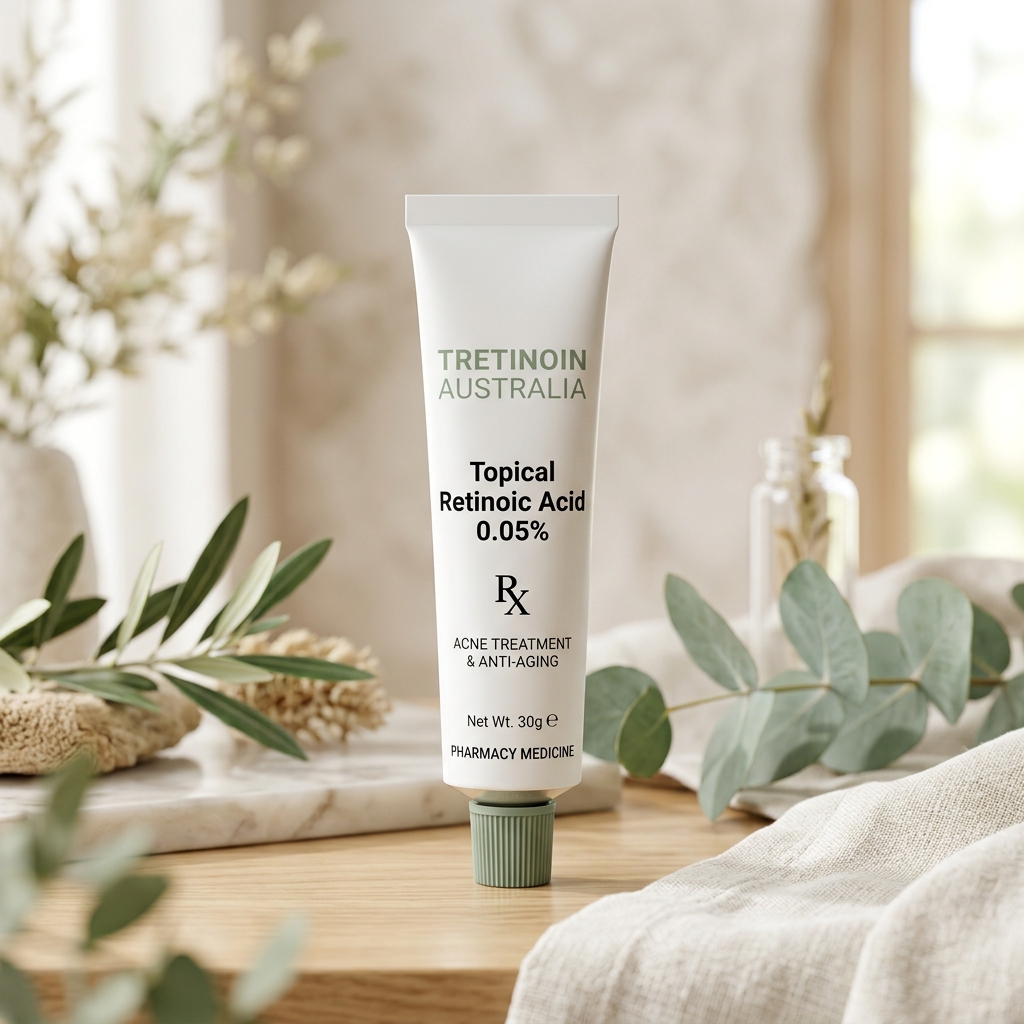
Medication Profile
Generic name:Tretinoin Cream (All-Trans Retinoic Acid)
Classification:Schedule 4 Prescription Medication
Available strengths:0.025%, 0.05%, 0.1%
Target skin profiles:Dry, normal, and photoaged skin types
A clinical guide to topical Tretinoin Cream: therapeutic mechanisms, concentration selection, application technique, and precautions.
1. Therapeutic indications and advantages
- Direct-acting retinoic acid that binds cellular retinoic acid receptors without intermediate conversion.
- Documented efficacy in dermatological trials for stimulating type I and III procollagen synthesis.
- Emollient base that helps counteract dryness during the initial weeks of treatment.
- Normalizes follicular epithelial desquamation to reduce microcomedone formation.
- Improves fine facial wrinkles and skin surface texture over consistent long-term use.
2. Potential side effects and retinization
- Initial retinization period commonly includes peeling, localized erythema, and dryness.
- Increases susceptibility to ultraviolet radiation; daily broad-spectrum SPF 50+ is mandatory.
- Transient flare of acne lesions may occur during the first 2 to 4 weeks.
- Contraindicated during pregnancy and breastfeeding.
3. Appropriate candidates for treatment
- Patients with comedonal or mild to moderate inflammatory acne.
- Patients addressing fine wrinkles, solar keratosis, or textural irregularities.
- Patients with dry or normal skin requiring an emollient cream base.
- First-time retinoid users (recommended starting strength: 0.025%).
4. Absolute Contraindications & Safety Warnings
- Patients who are pregnant, planning pregnancy, or breastfeeding.
- Patients with active facial eczema, open wounds, or sunburn.
- Patients currently using oral isotretinoin unless advised by a specialist.
5. Application protocol
Step 1: Cleanse with a mild cleanser and allow skin to dry thoroughly for 15 minutes.
Step 2: If skin is prone to irritation, apply a thin layer of plain moisturizer first.
Step 3: Dispense a pea-sized amount onto a fingertip. Dot onto forehead, cheeks, and chin.
Step 4: Smooth evenly over the face, avoiding eyelids and lip margins.
Step 5: Apply daily broad-spectrum SPF 50+ every morning.
6. Application zones
Application areas: Forehead, temples, cheeks, chin, and jawline.
Areas to avoid: Eyelids, peri-orbital bone, nasal creases, and lips.
Clinical Practice Note
Do not apply Tretinoin immediately after washing. Water increases epidermal permeability and can intensify burning or peeling. Begin with application twice weekly.
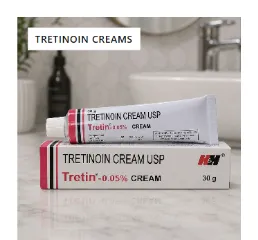
0.05% Cream
Tretin Tretinoin Cream 0.05% (30g)
Emollient Cream • 30g
$42.95 AUD